Breast reduction is one of the most rewarding operations in plastic surgery. Patient satisfaction is consistently high, and most people describe a sense of physical relief within days. The recovery is rarely dramatic, but it does require patience and a clear plan.
This guide walks you through the first six weeks after surgery, so you know what is normal, what to watch out for, and how to give yourself the best possible result.
Week 1: the early days
Most patients stay in hospital for one night, occasionally two. You will usually wake up wearing a supportive post-surgical bra and may have small drains in place for the first 24 to 48 hours. Drains are routine; they help reduce swelling and bruising and are removed as soon as output is low.
Pain is generally described as a tight, heavy ache rather than a sharp pain, and it is well controlled with regular paracetamol, an anti-inflammatory if permitted, and a short course of a mild opioid at night if needed. You will be encouraged to get up and walk gently from the first day — mobility is one of the best things you can do to reduce the risk of blood clots.
What's normal in week 1
- Bruising and swelling: expected and usually peaks at 48 to 72 hours.
- Tightness across the chest: a reassuring sign that the tissues are settling.
- Shooting or tingling sensations: nerves recovering, often intermittent.
- Fatigue: surprisingly common — rest when your body asks for it.
"The biggest favour you can do yourself in week one is to sleep on your back, propped up at about 30 degrees, and to resist the temptation to 'test' how much you can do."
Week 2: the first follow-up
You will usually be seen in clinic between seven and ten days after surgery. Dressings are checked, sutures assessed, and the wounds photographed for your record. Most stitches used today are dissolvable, so a second appointment for suture removal is not always needed.
Swelling starts to settle during this week, although it is still early days. You should continue to wear your supportive bra day and night — typically for the first four weeks without interruption, then day-time only thereafter. Bathing is usually fine once the wounds are sealed, but prolonged soaking and hot tubs should wait.
Weeks 3 and 4: finding a rhythm
Many patients feel close to themselves again by the end of week three. Desk-based work can usually be resumed around this time, initially with some flexibility to rest when needed. If your job involves lifting, reaching overhead or physical labour, plan for at least four to six weeks off — sometimes longer.
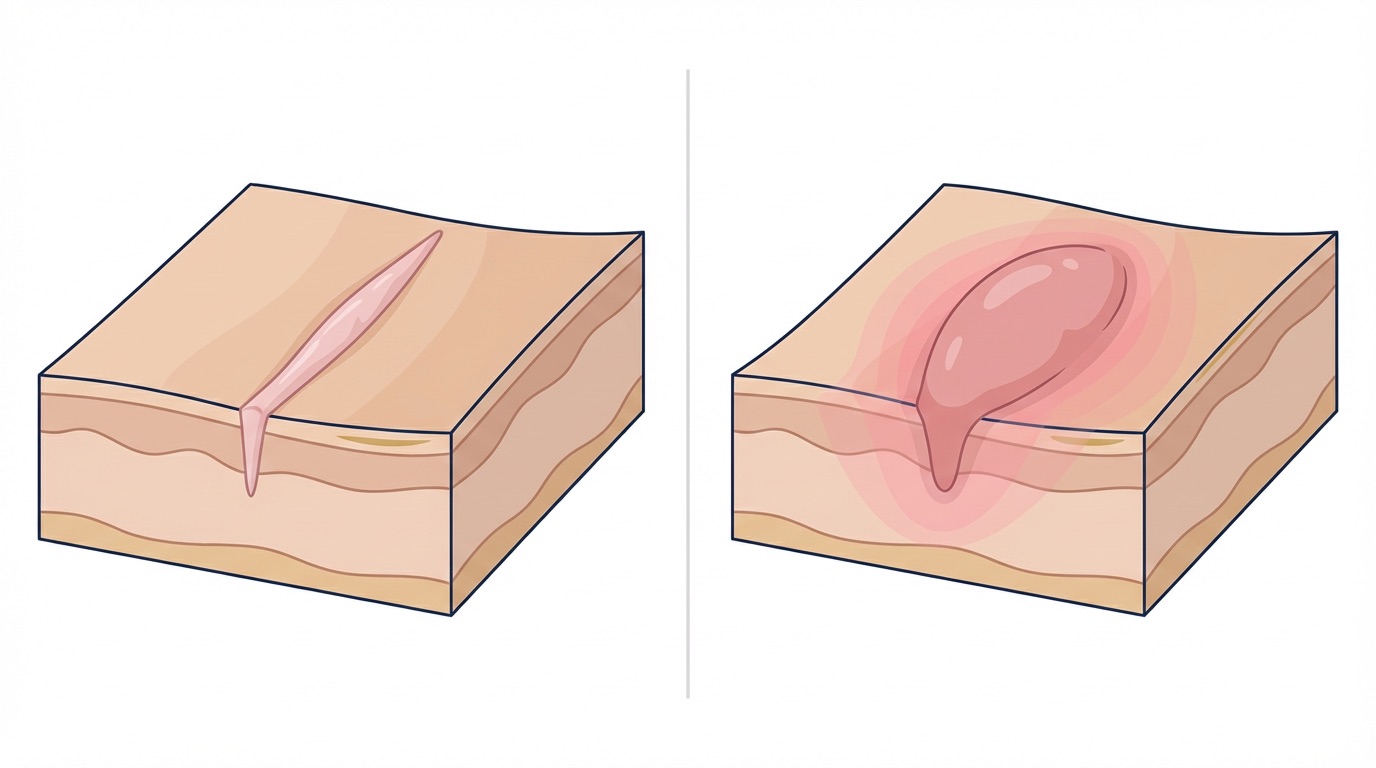
Scar care begins in earnest once the wounds are fully healed, typically around the two to three week mark. Silicone gel or silicone sheets applied daily for the first three to six months are well supported by evidence and remain my first recommendation for most patients. Gentle taping can also help, and sun protection over the scars is essential for the first twelve months.
Signs that need a quick call to your surgeon
- Increasing redness or pain: rather than gradually improving.
- Warmth or a rising temperature: a possible sign of infection.
- Sudden swelling on one side: particularly if tense or painful.
- Wound separation or discharge: especially if cloudy or offensive.
- A hard lump under the skin that is growing: rather than slowly shrinking.
Weeks 5 and 6: moving forward
By the fifth week, most patients are ready for gentle cardiovascular exercise — brisk walking, a stationary bike, or low-impact work that doesn't bounce or strain the chest. Swimming is usually fine once all wounds are completely sealed. Running, upper-body weights and high-impact classes should wait until around the eight-week mark, and ideally after a review.
Scar massage with a fragrance-free moisturiser or silicone gel, for a few minutes twice a day, becomes part of the routine. The scars will look their worst between weeks six and twelve — pink, raised and firm — before gradually softening, flattening and fading over the following year. Patience here is rewarded.
Longer-term: what to expect
Swelling can take up to six months to fully settle, and the final shape of the breasts often isn't obvious until around nine to twelve months after surgery. Most patients are able to wear a normal supportive bra by eight weeks, and many find they can wear styles they never felt comfortable in before. Sensation in the nipples and breast skin often changes temporarily and usually recovers over months, although a small degree of permanent change is possible.
When to seek advice
Your post-operative team should always be your first point of contact if something feels wrong. It is far better to send a quick photograph or make a phone call than to wait and worry. If you are considering breast reduction surgery or would like to discuss your recovery plan in more detail, please contact the clinic for a consultation.