Liposuction
Liposuction is a surgical procedure that uses fine cannulas to remove stubborn pockets of fat that have not responded to diet or exercise, helping to refine body contours either on its own or in combination with other procedures.
Overview
Liposuction is a surgical procedure that uses small cannulas inserted through tiny incisions to remove excess subcutaneous fat from specific areas of the body. It is designed to treat localised pockets of stubborn fat that have not responded to a sensible diet and regular exercise, and is most suitable for patients who are close to their target weight with good skin elasticity.
Liposuction is not a treatment for obesity and it does not improve the appearance of loose skin or cellulite. It can be performed on its own as an isolated contouring procedure or combined with other body contouring operations such as abdominoplasty or brachioplasty to refine the final shape.
Benefits
- Targeted fat removal: Precisely addresses stubborn pockets of fat in areas such as the abdomen, flanks, back, thighs, knees, arms, chin or neck that have resisted diet and exercise.
- Refined body contour: Creates a smoother, more sculpted silhouette that is in better proportion with the rest of the body.
- Minimal scarring: Tiny access incisions typically heal to leave small, inconspicuous scars.
- Versatile adjunct: Can be combined with other surgical procedures such as abdominoplasty or arm lift to refine the final contour.
- Shorter recovery: When performed as a standalone procedure, liposuction is generally a day case with a comparatively quick return to normal activities.
- Long-lasting result: Fat cells that have been removed do not regrow, and results are durable provided weight is maintained.
Surgical Techniques
Liposuction is performed either under local anaesthetic with sedation for small areas or under general anaesthetic for larger or multiple areas. The procedure typically takes between one and three hours depending on the extent of treatment. Mr Singh will discuss the most appropriate approach for you during your consultation.
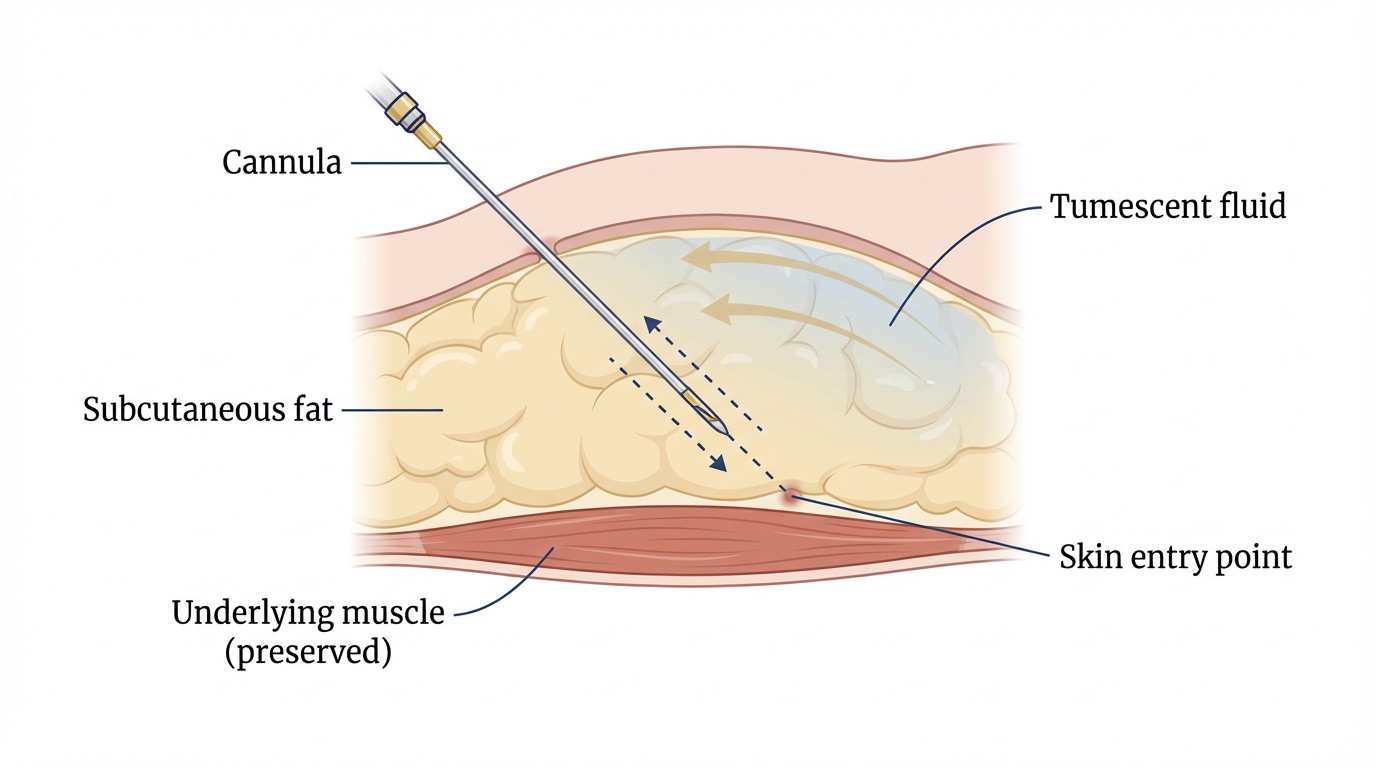
- Tumescent technique: A large volume of dilute local anaesthetic and adrenaline is infiltrated into the treatment area before fat removal. This numbs the area, reduces bleeding and bruising, and makes the fat easier to remove.
- Small access incisions: Tiny incisions, usually only a few millimetres in length, are placed in inconspicuous locations such as skin creases so that any scars are difficult to see.
- Cannula-based fat removal: Fine cannulas are passed back and forth through the fatty layer in a controlled pattern to evenly break up and aspirate the fat.
- Multiple areas: Several different areas can usually be treated in the same operation, with the total volume of fat removed limited for safety.
- Closure: The small access incisions are closed with a single fine suture or simply dressed with adhesive strips, and a compression garment is applied.
Risks & Considerations
General Risks
- Infection: Small risk of wound infection at access sites which can delay healing and require antibiotics.
- Bleeding and bruising: Bruising and minor bleeding are universal after liposuction; larger haematomas are rare but can occur.
- Scarring: Small permanent scars at the access sites which usually fade and are easy to conceal.
- Blood clots (DVT/PE): As with any surgery, there is a small risk of deep vein thrombosis and pulmonary embolism. Stockings, calf pumps and early mobilisation are used to reduce this risk.
- Anaesthetic risks: As with any surgery under local or general anaesthesia.
Specific Risks to Liposuction
- Contour irregularities: Waviness, lumpiness or dimpling of the skin, particularly if the skin has reduced elasticity or if too much fat is removed in one area.
- Asymmetry: Differences in contour between the treated sides that may occasionally require a small touch-up procedure.
- Loose skin: Liposuction reduces volume but does not tighten skin; patients with pre-existing laxity may find their skin appears looser after fat removal.
- Prolonged swelling: Swelling can take several months to fully settle, and the final result is not usually visible until around six months.
- Altered sensation: Temporary numbness or hypersensitivity of the treated areas that usually settles over weeks to months.
- Fluid collection (seroma): Occasional collection of fluid in the treated area which may need drainage in clinic.
- Rare major complications: Very rarely, liposuction has been associated with serious complications such as fat embolism or injury to underlying organs. Careful patient selection and technique keep this risk extremely low.
Recovery
Compression Garments
- Compression garment: A firm compression garment covering the treated areas is worn 24/7 for approximately 4 weeks and then during the day for a further period, to help reduce swelling and encourage the skin to redrape smoothly.
- Gentle mobilisation: Regular gentle walking from the day of surgery helps reduce the risk of blood clots and settle swelling.
Wound Care
- Dressings: The tiny access incisions are usually covered with simple adhesive strips or small dressings; it is normal for fluid to ooze from these sites for a day or two after surgery.
- Drains: Drains are not typically required after standalone liposuction.
- Cleaning: Gentle showering with mild soap is encouraged once you have been advised it is safe, with careful drying to reduce the risk of infection.
Scar Advice
- Scar care products: The small access incisions rarely need more than moisturiser, but silicone gel can be used on the healed wound if preferred.
- Sun protection: Protect the small scars from direct sun exposure for the first 6–8 weeks with sunscreen or clothing.
- Massage: Gentle massage of the treated areas once fully healed can help to settle any residual firmness or unevenness.
Follow-Up
- Initial Post-Op Visit: Typically scheduled around a week following surgery for a wound check. Any sutures used are usually dissolving.
- Subsequent Visits: Usually seen again at 6 weeks and then around 3–6 months, when most of the swelling has settled and the final contour can be assessed.
- Long-Term Care: Mr Singh remains available for any concerns or further follow-up as required.
Procedure Summary
Ready to Discuss Liposuction?
If you are considering liposuction to refine stubborn areas of your body contour, please feel free to contact us to answer any questions you may have or to schedule a consultation and learn more about how this procedure may benefit you.
Book a Consultation