Hypertrophic Scar Treatment
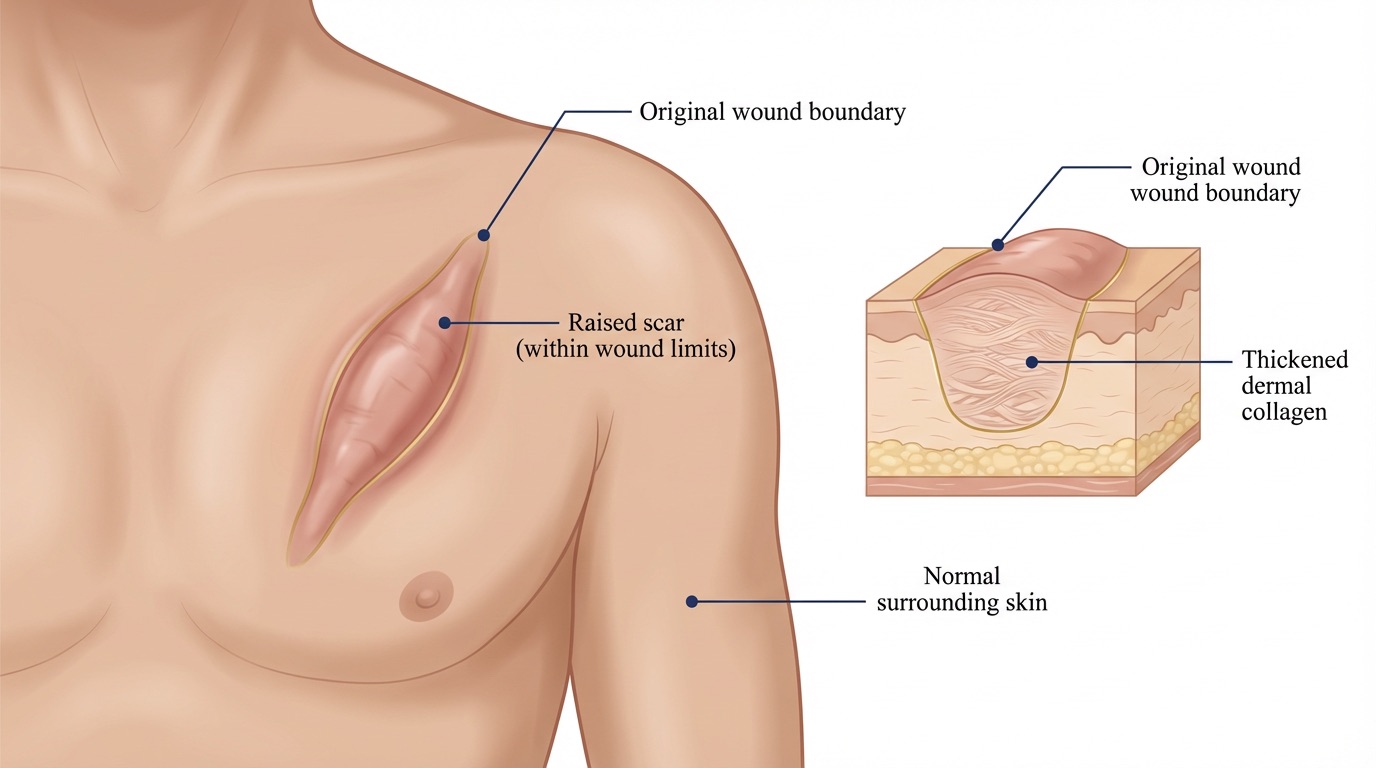
Hypertrophic scars are raised, often red scars that remain confined within the boundaries of the original wound. They can be itchy, tender and cosmetically troubling. Mr Singh offers a stepwise, evidence-based treatment pathway using silicone therapy, steroid injections and, where appropriate, surgical revision to soften, flatten and improve the appearance of these scars.
Overview
Hypertrophic scars form when the body produces too much collagen during wound healing, resulting in a raised, firm and often red or pink scar. Unlike keloids, hypertrophic scars remain within the confines of the original wound and tend to improve over time. They are most commonly seen after burns, lacerations, acne and surgery, especially in areas of high skin tension such as the chest, shoulders, back and across joints.
Hypertrophic scars can be uncomfortable, itchy or tender and are often a source of cosmetic concern. Mr Singh takes a graduated approach to treatment, starting with the least invasive measures and escalating to surgical revision only where necessary. Early intervention with silicone and massage, combined with steroid injections where appropriate, can produce significant improvement.
Benefits
- Flatter, softer scars: Reduction in scar thickness and firmness over time with targeted treatment.
- Symptom improvement: Relief from itching, tenderness and discomfort commonly associated with active hypertrophic scars.
- Improved colour: Gradual fading of redness as the scar matures and settles.
- Better function: Improved suppleness and range of motion, particularly for scars crossing joints or on flexural surfaces.
- Enhanced appearance: A more inconspicuous scar that blends with surrounding skin.
- Increased confidence: Improved self-image, especially when scars are in exposed or clothed-over areas such as the chest and shoulders.
Surgical Techniques
Treatment of hypertrophic scars is tailored to the age, size, symptoms and location of the scar. Mr Singh will usually begin with conservative measures and escalate treatment where needed.
- Silicone Therapy: Medical-grade silicone sheets or gels are applied daily for several months and are the foundation of hypertrophic scar management. They help hydrate the scar, regulate collagen production and reduce redness.
- Intralesional Steroid Injections: Steroid injected directly into the thickened scar softens the tissue, relieves itch and flattens the scar. A short course of injections spaced several weeks apart is often sufficient.
- Pressure Therapy: Pressure garments, especially for burns and larger scars, can help control scar thickness during the active remodelling phase.
- Scar Massage: Regular massage with a bland moisturiser helps to break down excess collagen and improve suppleness.
- Surgical Revision: If conservative measures fail to improve a stubborn, mature hypertrophic scar, surgical excision and careful re-closure, sometimes combined with local tissue rearrangement, can produce a much improved scar.
- Adjuvant Measures: Post-excision silicone and steroid injections are usually employed to reduce the risk of the hypertrophic response recurring.
Risks & Considerations
General Risks
- Infection: A small risk of infection with any surgical revision or injection procedure.
- Bleeding and bruising: Minor bleeding or bruising can occur at injection or excision sites.
- Scarring: Any treatment leaves a scar; the goal is a flatter, softer, less symptomatic result.
- Anaesthetic reactions: Rare sensitivity to local anaesthetic agents.
Specific Risks to Hypertrophic Scar Treatment
- Recurrence of thickening: Hypertrophic scars can thicken again, especially in high-tension areas, requiring further treatment.
- Skin atrophy: Over-injection of steroid can thin the surrounding skin, sometimes producing a visible depression.
- Pigmentation changes: Both lightening and darkening of the skin can occur following injections or surgery, particularly in darker skin types.
- Telangiectasia: Small dilated capillaries can appear in treated areas.
- Delayed healing: Particularly where scars cross high-tension areas such as the sternum or shoulder.
- Incomplete response: Not all scars respond equally and the degree of improvement can vary from patient to patient.
Recovery
Wound Care
- Dressings: Where surgical revision is performed, a simple dressing is applied and kept in place for the first few days; it is usually robust enough to tolerate gentle showering.
- Cleaning: The wound can be cleaned gently with mild soap and water once the dressing is removed, and daily showering is encouraged to reduce infection risk.
- Activity: Most daily activities can be resumed straight away; vigorous exercise and heavy lifting should be avoided for around two weeks to allow safe early healing.
Scar Advice
- Silicone Therapy: Silicone sheets or gel should be used daily once the wound is fully healed, and continued for at least three to six months.
- Sun Protection: Protect new scars from sun exposure with high-factor sunscreen or clothing for the first 6–8 weeks to prevent pigmentation changes.
- Massage: Regular gentle scar massage with moisturiser helps flatten and soften the scar during the remodelling phase.
- Follow-Up Injections: Further steroid injections may be scheduled at intervals if thickening persists.
Follow-Up
- Initial Post-Op Visit: Typically scheduled around a week after any surgical revision to check wound healing. Sutures are usually dissolving.
- Injection Appointments: Steroid injections are normally given every 6 to 8 weeks for as long as the scar continues to respond.
- Subsequent Visits: Review at 3 and 6 months to assess maturation of the scar and adjust the treatment plan as needed.
- Long-Term Care: Mr Singh remains available for any concerns or further follow-up as required.
Procedure Summary
Ready to Discuss Hypertrophic Scar Treatment?
If a raised or uncomfortable scar is bothering you, please feel free to contact us to answer any questions you may have or to schedule a consultation and learn how treatment with Mr Singh may help.
Book a Consultation