Non-Surgical Scar Treatments
Not every scar needs surgery. A carefully chosen combination of silicone sheets and gels, steroid injections, pressure therapy and regular massage can make a significant difference to the appearance, texture and symptoms of many scars. Mr Singh offers tailored non-surgical scar management for patients who wish to improve their scars without an operation.
Overview
Non-surgical scar management brings together a range of evidence-based treatments that can help scars mature into a flatter, softer, less noticeable form. These approaches are particularly useful for scars that are still in their active remodelling phase, for patients who are not suitable for or do not wish to undergo surgery, and as an adjunct to surgical scar revision to optimise the final result.
Mr Singh will assess your scar in terms of age, colour, thickness, symptoms and location, and recommend a treatment plan that may involve one or several non-surgical modalities. The aim is to provide a practical, well-tolerated regime that can often be carried out in an outpatient setting with little or no downtime.
Benefits
- No surgery required: Improvements in scar appearance and symptoms without the need for incisions, general anaesthesia or downtime.
- Symptom relief: Effective reduction of itching, tenderness and discomfort often associated with active scars.
- Flatter, softer scars: Gradual improvement in scar thickness and firmness with consistent use of silicone and other therapies.
- Improved colour: Fading of redness and, in some cases, improvement in pigmentation irregularities as the scar matures.
- Minimal downtime: Most treatments can be performed in clinic in a short appointment with immediate return to normal activities.
- Flexible, combined approach: Non-surgical treatments can be combined with each other and with surgical revision for optimal long-term results.
Treatment Approach
Non-surgical scar management is rarely a single intervention. Mr Singh will construct an individualised plan based on your scar and goals, combining several of the approaches below where appropriate.
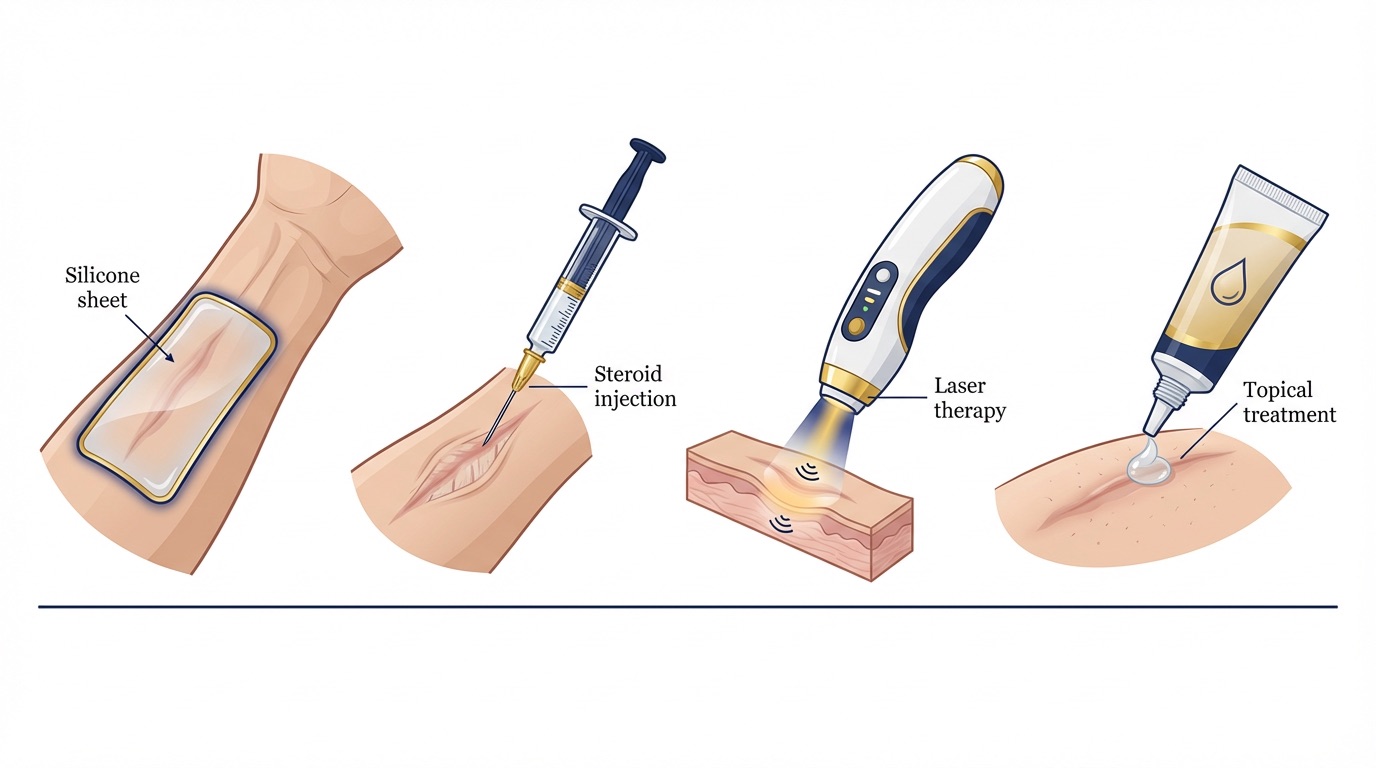
- Silicone Sheets: Medical-grade silicone sheets are applied directly over the scar for several hours each day. They help to hydrate and occlude the scar, regulate collagen production and reduce redness and thickness over time.
- Silicone Gels: For scars in areas where sheets are impractical, such as the face, silicone gels can be applied twice daily to achieve similar benefits in a more convenient form.
- Intralesional Steroid Injections: Steroid is injected directly into thick, raised or symptomatic scars to soften the tissue, relieve itching and reduce bulk. A course of injections spaced several weeks apart is usually recommended.
- Pressure Therapy: Custom pressure garments or bespoke clips (for example for ear lobe scars) are used to apply gentle sustained pressure that discourages raised scarring during the active phase.
- Scar Massage: Regular gentle massage with a bland moisturiser, often combined with silicone, helps to soften the scar, improve suppleness and encourage favourable remodelling of collagen.
- Sun Protection and Skincare: Daily high-factor sunscreen is essential to prevent long-term pigmentation changes and is a cornerstone of any non-surgical scar care plan.
Risks & Considerations
General Risks
- Skin irritation: Mild redness, itching or contact dermatitis can occur in response to silicone sheets, tapes or adhesive products.
- Discomfort: Injection and pressure therapy can cause temporary discomfort, which is usually well tolerated.
- Allergic reactions: Rare sensitivity to silicone products, local anaesthetic or injected medications.
- Incomplete response: Scars respond differently to treatment and the degree of improvement cannot be guaranteed.
Specific Risks to Non-Surgical Scar Treatments
- Skin atrophy: Over-injection of steroid can thin the surrounding skin, sometimes leaving a visible depression.
- Pigmentation changes: Steroid injections and sun exposure can cause lightening or darkening of the skin, particularly in darker skin types.
- Telangiectasia: Small dilated blood vessels can appear in the treated area.
- Pressure-related effects: Prolonged pressure therapy can cause mild discomfort, skin changes or, rarely, minor breakdown of fragile skin.
- Recurrence: Some scars, especially keloid and hypertrophic scars, can recur or worsen despite treatment and may ultimately require surgical management.
- Commitment required: Many non-surgical treatments only work with consistent daily use over many months, and results depend on patient compliance.
Recovery
Wound Care
- No Dressings: Most non-surgical scar treatments do not produce open wounds and do not require formal dressings. After steroid injection a small plaster may be applied briefly.
- Skin Hygiene: The skin overlying the scar should be kept clean and moisturised; silicone sheets can be washed and reused according to the manufacturer's instructions.
- Activity: Normal daily activities, including exercise, can typically be resumed straight away after an appointment.
Scar Advice
- Consistent Silicone Use: Silicone sheets or gel should be used daily for several months to achieve the best effect; consistency is key.
- Sun Protection: Daily high-factor sunscreen should be applied over the scar for the first 6–8 weeks to prevent pigmentation changes.
- Scar Massage: Regular gentle massage with a bland moisturiser helps soften the scar and improve texture throughout the remodelling phase.
- Pressure Garments: Where prescribed, garments should be worn as directed, usually for many hours each day over several months.
Follow-Up
- Injection Appointments: Steroid injections are typically given every 6 to 8 weeks for as long as the scar continues to respond.
- Interim Reviews: Review appointments are arranged at intervals to assess progress, adjust the treatment plan and provide further advice on silicone and massage.
- Long-Term Review: A review at around 6 to 12 months allows the maturing scar to be assessed and any further treatment planned if required.
- Long-Term Care: Mr Singh remains available for any concerns or further follow-up as required, and will advise if surgical revision would offer additional benefit.
Procedure Summary
Ready to Discuss Non-Surgical Scar Treatment?
If you would like to improve the appearance or comfort of a scar without surgery, please feel free to contact us to answer any questions you may have or to schedule a consultation and learn how a tailored non-surgical plan with Mr Singh may help.
Book a Consultation