Prominent Ear Correction
Also known as otoplasty or pinnaplasty, prominent ear correction is a refined procedure that reshapes the cartilage of the ear to bring it into a more natural position closer to the head. Suitable for adults and children from around the age of five, the procedure can resolve long-standing self-consciousness and restore balance to the facial profile.
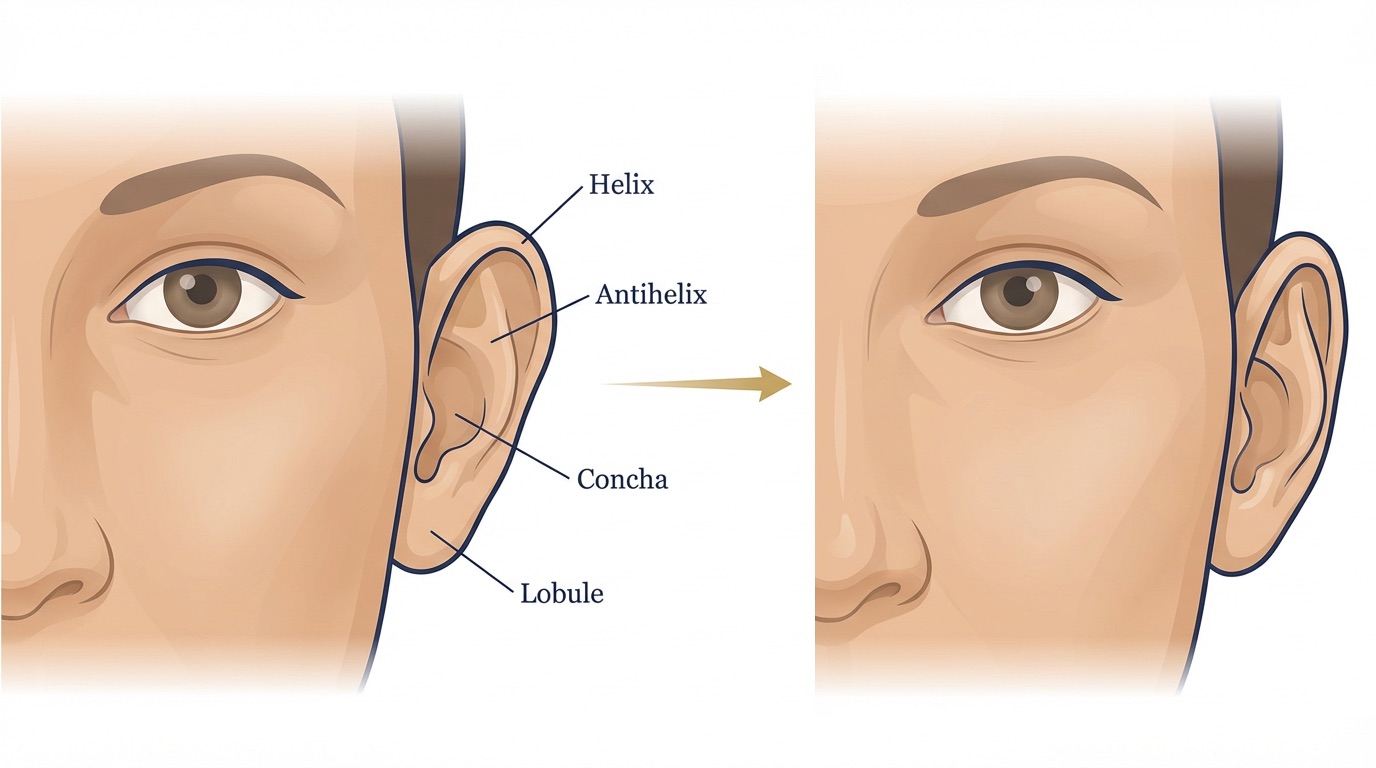
Overview
Prominent ear correction, also known as otoplasty or pinnaplasty, is a surgical procedure which reshapes the cartilage framework of the ear so that it sits in a more natural position against the side of the head. The procedure addresses under-developed folds within the ear cartilage and, where needed, an over-sized bowl (concha) that pushes the ear outwards.
The procedure is suitable for children from around the age of five, once the ears have reached near-adult size, as well as adolescents and adults of any age. Many patients seek correction after years of feeling self-conscious about the shape or position of their ears, particularly when wearing their hair short or tied back. Mr Singh will take the time to understand your concerns and tailor the surgical plan to deliver a natural, symmetrical result.
Benefits
- More natural ear position: The ears sit closer to the head, producing a balanced and harmonious facial profile.
- Improved symmetry: Asymmetry between the two ears can be addressed at the same time for a more even appearance.
- Boosted confidence: Many patients, particularly children and teenagers, experience significant improvements in self-esteem and social confidence.
- Freedom with hairstyles: Greater comfort wearing short hair, hair tied back or styles that previously drew attention to the ears.
- Long-lasting results: The cartilage is permanently reshaped, meaning the outcome is stable over time.
- Hidden scars: Incisions are placed in the natural crease behind the ear, leaving scars that are virtually undetectable once healed.
Surgical Techniques
The underlying reason for ear prominence varies between patients. Mr Singh will assess the anatomy of your ears in detail and select the appropriate combination of techniques to achieve a natural, symmetrical result. The procedure is most commonly performed under local anaesthetic with sedation in adults, or under general anaesthetic in children.
- Incision placement: A discreet incision is made in the natural skin crease behind the ear, giving direct access to the cartilage while keeping scars well hidden.
- Cartilage scoring and shaping: The cartilage of the antihelical fold is gently scored and reshaped to recreate the missing fold and allow the upper ear to sit closer to the head.
- Concha setback: Where the bowl of the ear is oversized, a small segment of cartilage may be removed or repositioned to reduce its projection.
- Cartilage-sparing sutures: Permanent sutures (Mustarde and Furnas techniques) are placed within the cartilage to hold the new shape in place without weakening it.
- Skin closure: The skin is closed with dissolvable sutures and a supportive head bandage is applied to protect the reshaped ears during the early stages of healing.
Risks & Considerations
General Risks
- Infection: Risk of wound infection which can delay healing and occasionally require antibiotics or further treatment.
- Bleeding: Risk of bleeding after surgery which can collect behind the ear as a haematoma and may need to be drained in theatre.
- Scarring: Permanent scars behind the ear which are usually well hidden but will not disappear completely.
- Anaesthetic risks: As with any procedure requiring local or general anaesthesia.
Specific Risks to Otoplasty
- Asymmetry: Minor differences in position or shape between the two ears can persist or develop as swelling settles.
- Recurrence: In a small number of cases the ear can gradually return towards its original position, particularly if sutures loosen or cartilage relaxes.
- Over-correction: The ear can occasionally sit too close to the head, giving a telephone-ear or pinned appearance.
- Suture problems: Permanent sutures can sometimes become palpable under the skin or, rarely, extrude and need to be removed.
- Altered sensation: Temporary numbness or altered sensation around the ear is common in the early weeks and usually resolves.
- Chondritis: A rare infection of the cartilage itself which requires prompt treatment with antibiotics.
Recovery
Headband & Dressings
- Initial head bandage: A soft supportive bandage is worn around the head for the first week to protect the ears and reduce swelling.
- Sports-style headband: Once the bandage is removed, a soft headband is worn day and night for a further 2–3 weeks, then at night only for up to 6 weeks to protect the ears while healing.
Wound Care
- Cleaning: Gentle cleaning with mild soap and water is encouraged once the dressings are removed and showering is usually allowed the day after surgery.
- Sleeping position: Sleeping on the back with the head slightly elevated for the first 1–2 weeks helps to reduce swelling and protect the ears.
Scar Advice
- Scar care products: Silicone gels can be used once the wounds are fully healed to optimise the final scar.
- Sun protection: Protect the scars from direct sun exposure for the first 6–8 weeks to prevent pigmentation changes.
- Massage: Gentle scar massage once fully healed helps the scars soften and flatten.
Follow-Up
- Initial post-op visit: Typically scheduled around a week following surgery to remove the head bandage and inspect the wounds. Sutures are usually dissolving.
- Subsequent visits: Usually seen again at 6 weeks for an early check and again at around 3 months to review the final position and shape.
- Long-term care: Mr Singh remains available for any concerns or further follow-up as required.
Procedure Summary
Ready to Discuss Prominent Ear Correction?
If you are considering otoplasty for yourself or your child, please feel free to contact us to answer any questions you may have or to schedule a consultation and learn more about how this procedure may benefit you.
Book a Consultation