Benign Skin Lesion Removal
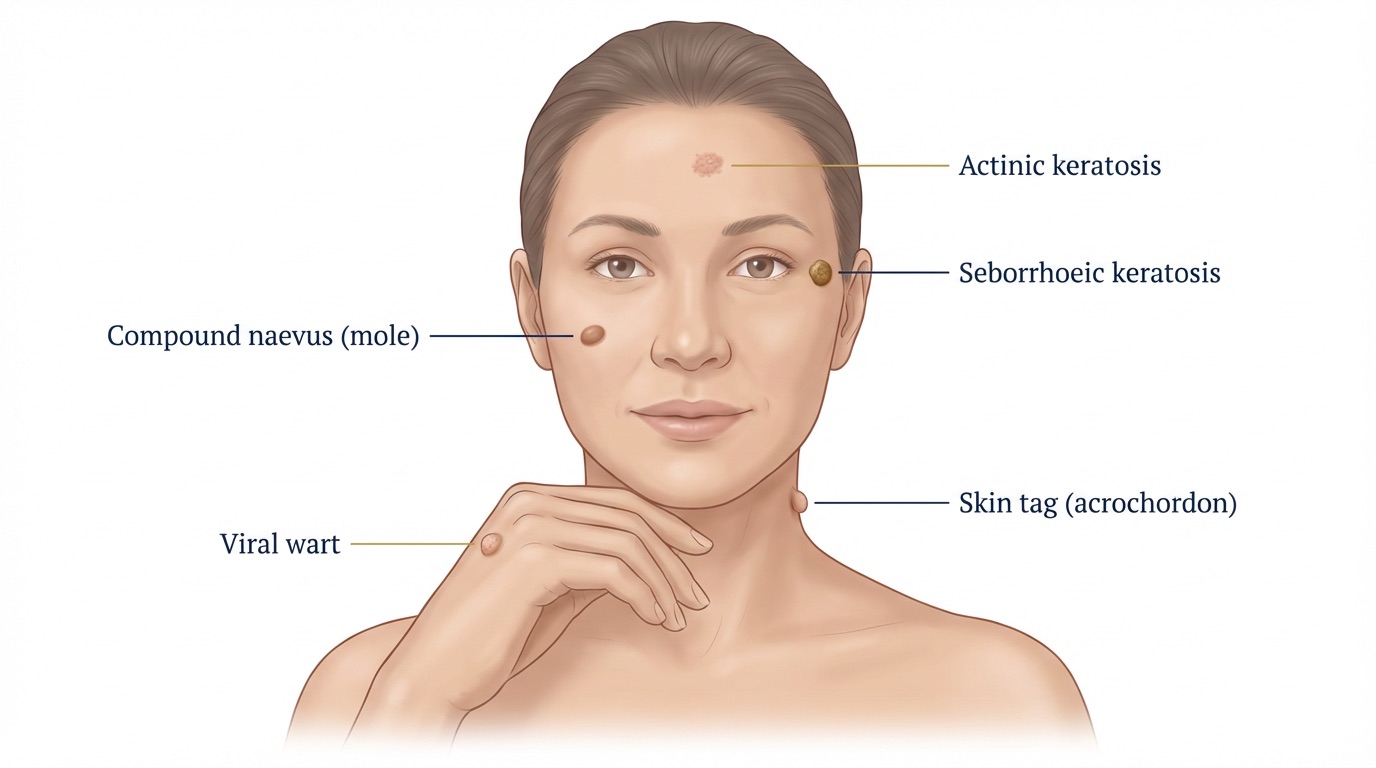
Benign (non-cancerous) skin lesions include a wide variety of growths such as moles, skin tags, seborrhoeic keratoses, viral warts and dermatofibromas. Whilst harmless, many patients choose to have these lesions removed for cosmetic reasons, because of irritation from clothing or jewellery, or to obtain a definitive diagnosis through histological examination.
Overview
Benign skin lesions are non-cancerous growths that arise from the skin or its underlying structures. They are extremely common and most people will develop several during their lifetime. Common types include melanocytic naevi (moles), skin tags (acrochordons), seborrhoeic keratoses, viral warts, dermatofibromas, syringomas and milia.
Removal is usually straightforward and carried out as a day case under local anaesthetic. Mr Singh will carefully examine each lesion prior to treatment and, where appropriate, send the specimen for histological examination to confirm the diagnosis and provide peace of mind that the lesion is indeed benign.
Benefits
- Cosmetic improvement: Removal of unsightly lesions from visible areas such as the face, neck and hands can significantly enhance appearance and confidence.
- Symptom relief: Lesions that catch on clothing, jewellery or during shaving can cause recurrent bleeding, irritation and discomfort which is resolved by removal.
- Definitive diagnosis: Histological examination of the excised tissue provides certainty about the nature of the lesion and rules out any unexpected malignancy.
- Reassurance: Removal of a changing or atypical lesion offers peace of mind, particularly for patients with a history of skin cancer or a strong family history.
- Prevention of complications: Some lesions become inflamed or infected repeatedly and removal eliminates this ongoing problem.
- Day-case procedure: Most removals are performed quickly under local anaesthetic with minimal disruption to daily life.
Surgical Techniques
The technique used depends on the type, size and location of the lesion, as well as whether a histological diagnosis is required. Mr Singh will explain the most suitable option for you during your consultation.
- Excision biopsy: The lesion is removed in an ellipse of skin with a small margin of surrounding tissue and the wound is closed with sutures. This is the gold standard technique when a histological diagnosis is needed.
- Shave excision: Raised lesions such as some benign moles or seborrhoeic keratoses can be shaved flush with the surrounding skin using a fine blade, avoiding the need for sutures.
- Curettage and cautery: Lesions such as viral warts, seborrhoeic keratoses and pyogenic granulomas can be scraped away with a curette and the base treated with electrocautery.
- Local anaesthetic: Almost all procedures are performed under local anaesthetic infiltrated around the lesion, ensuring you remain comfortable throughout.
- Closure: Where sutures are needed, fine absorbable or non-absorbable stitches are used to optimise the cosmetic result.
Risks & Considerations
General Risks
- Infection: A small risk of wound infection which may require antibiotics and can occasionally delay healing.
- Bleeding and bruising: Minor bleeding and bruising around the wound is common and usually settles quickly.
- Scarring: Every excision leaves a scar. Whilst efforts are made to optimise the result, scars cannot be avoided entirely.
- Delayed healing: Particularly in areas subject to movement or tension such as the back, shoulders and lower legs.
Specific Risks to Benign Lesion Removal
- Recurrence: Some lesions, particularly viral warts and seborrhoeic keratoses, can recur after removal.
- Pigmentation changes: The area around the scar can appear lighter or darker than the surrounding skin, particularly in those with darker skin types.
- Hypertrophic or keloid scarring: Some patients are prone to thickened, raised scars particularly over the chest, shoulders and back.
- Incomplete removal: Where a shave technique is used for diagnostic purposes, the deeper portion of the lesion may remain and require further treatment.
- Unexpected histology: Occasionally a lesion thought to be benign is found on histology to be pre-malignant or malignant and may require further surgery.
- Nerve injury: Rarely, small cutaneous nerves in the area may be affected, resulting in temporary or permanent altered sensation.
Recovery
Wound Care
- Dressings: A simple adhesive dressing is usually applied and is robust enough to survive gentle showering thereafter.
- Cleaning: Gentle cleaning with mild soap and water is encouraged and may be done from day 1, washing over the dressings. They are robust enough to survive this and once finished should be patted dry and then left to air dry.
- Sutures: Non-absorbable sutures are typically removed 7 to 14 days following the procedure depending on the area; facial sutures come out earliest and those on the back or legs latest.
- Activity: Most normal activities can be resumed immediately, but heavy lifting and vigorous exercise should be avoided for 1 to 2 weeks to reduce wound tension.
Scar Advice
- Scar Care Products: Use moisturisers or silicone sheets/gels once the wound has fully healed to help minimise scarring.
- Sun Protection: Protect the scar from sun exposure for the first 6–8 weeks, using a high factor sunscreen or covering with clothing, to prevent pigmentation changes.
- Massage: Once the wound is fully healed, gentle scar massage can help to soften and flatten the scar.
Follow-Up
- Suture Removal: Where non-absorbable sutures have been used, you will be seen by the practice nurse or your GP to have them removed at the appropriate time.
- Histology Review: If the lesion was sent for histological examination, you will be contacted with the result, usually within 2 weeks.
- Scar Check: A review appointment at around 3 months is offered to check the scar and discuss any concerns.
- Long-Term Care: Mr Singh remains available for any concerns or further follow-up as required.
Procedure Summary
Ready to Discuss Benign Skin Lesion Removal?
If you have a mole, skin tag or other benign lesion you would like assessed or removed, please feel free to contact us to answer any questions you may have or to schedule a consultation with Mr Singh.
Book a Consultation